SprintZero
- First step
- A foundation in half an hour
- You talk to
- The person building it
- Price
- Fixed in writing
- Done
- 72 hours after the clock starts
- You own
- The code, infra and keys
SprintZero builds your MVP in one fixed 72-hour sprint. Bring a bare idea or a finished plan. The person you talk to builds it, deploys it and hands you the code, the infrastructure and the keys.
The gap
Sheet 02
just for us
Our agentic pipeline makes the plan easy. Share your idea and, within half an hour, it turns it into a product foundation, enough to judge the plan before you book. What stalls ideas is getting from that plan to a product people can log into: weeks of paid discovery, freelancers to manage, or a no-code build that hits a wall the first time you need something custom.
The agentic pipeline
The first week of most projects goes on discovery: calls, a scoping document, someone writing the plan. We kick yours off with an agentic pipeline instead. You share the idea, and within half an hour it has produced the product foundation your build starts from.
Within half an hour
Your idea
Shared in your own words. No brief needed.
PRD
What it is, who it is for and what ships first.
Brand kit
Colours, type and a look to build against.
Tech design
Architecture, data model and how it deploys.
Jira board
The build, broken into epics and stories.
Time to a plan you can judge
Agentic pipeline
30 min
The usual way
A week or more
Enough to judge the plan before you book.
Swipe to compare
How a sprint runs
Sheet 03
The clock only starts once the scope is fixed and agreed. Most sprints run Friday to Sunday. Urgent ones can run midweek.
Before the clock
30 min
You walk through the idea, or the plan you already have. We work out together whether it fits 72 hours, and what fits if it doesn't. The call is recorded, with your OK, so nothing gets lost.
Half an hour
Our agentic pipeline turns what you shared into a product foundation: a PRD, a brand kit, a tech design and a Jira board. Enough to judge the plan before you book. Came with your own plan? We start from yours.
In writing
With the plan in hand, you get the scope and the price in writing, and you pick a start slot.
The 72 hours
T+00h
The clock starts on your slot with a short kickoff: we walk through the plan together, the pipeline's or your own, and the build begins.
T+00–24h
Architecture, data model, auth and the deploy pipeline. You get a build link on day one, updated every day after.
T+24–60h
The core flows from the board, built for real rather than mocked, and tested against the paths your users will take.
T+60–72h
Production deploy, a last pass on the paths that matter, and a walkthrough recording of everything that shipped.
T+72h
The repo, the infrastructure and the keys move to you. The balance is invoiced on delivery.
After
30 days
Bug fixes and questions on what shipped, for 30 days. New features are quoted separately.
Recent builds
Sheet 04
Each time is how long the first working version took. Open one for the screens, the stack and, where there was one, the product foundation it started from.
The 72-hour line
Peak height: how long the first working version took
Nº 01 / 05: Murmur
Nº 01
Web app
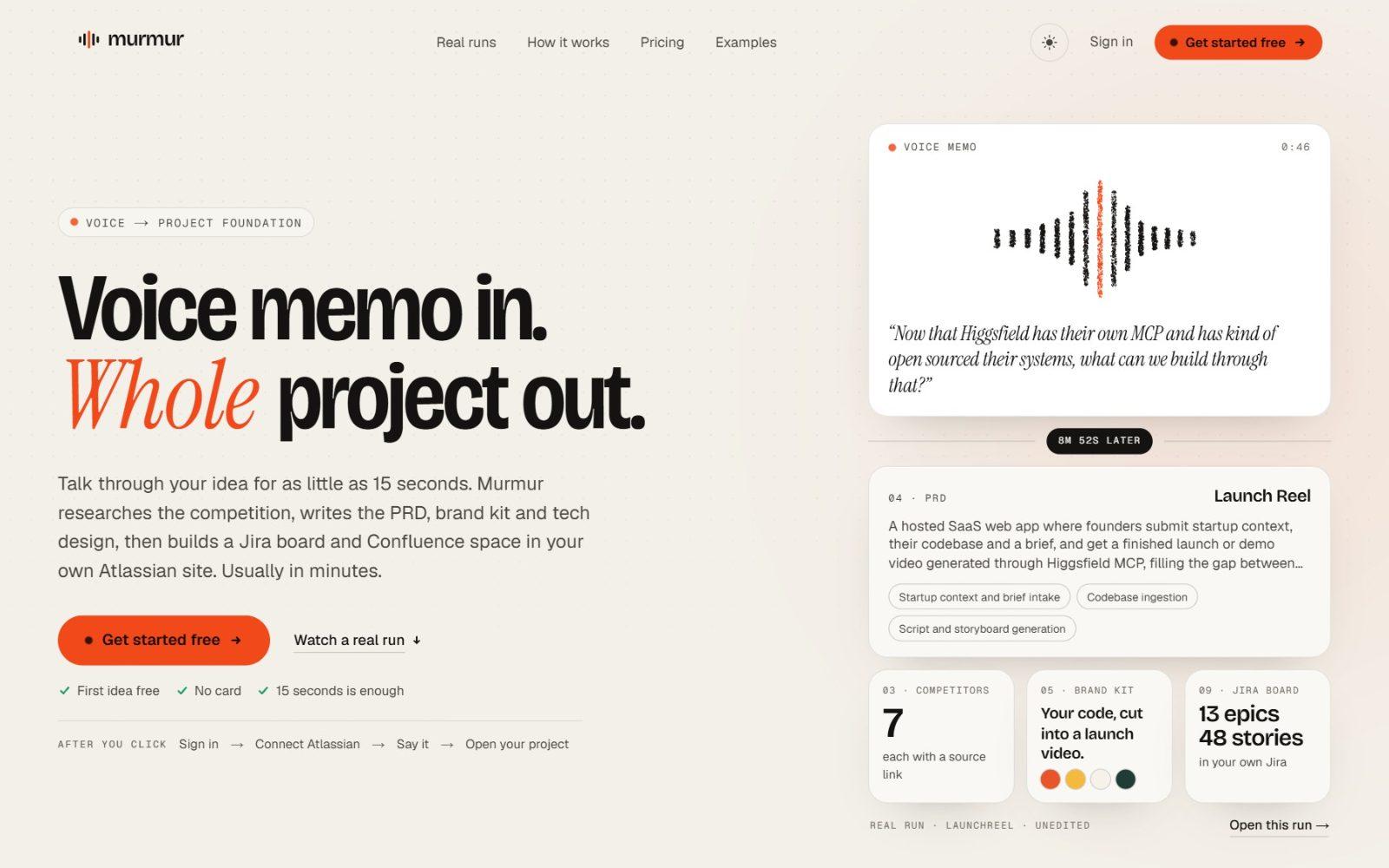
Talk through an idea, get back a PRD, a brand kit, a tech design and a Jira board.
Nº 02
Mobile game
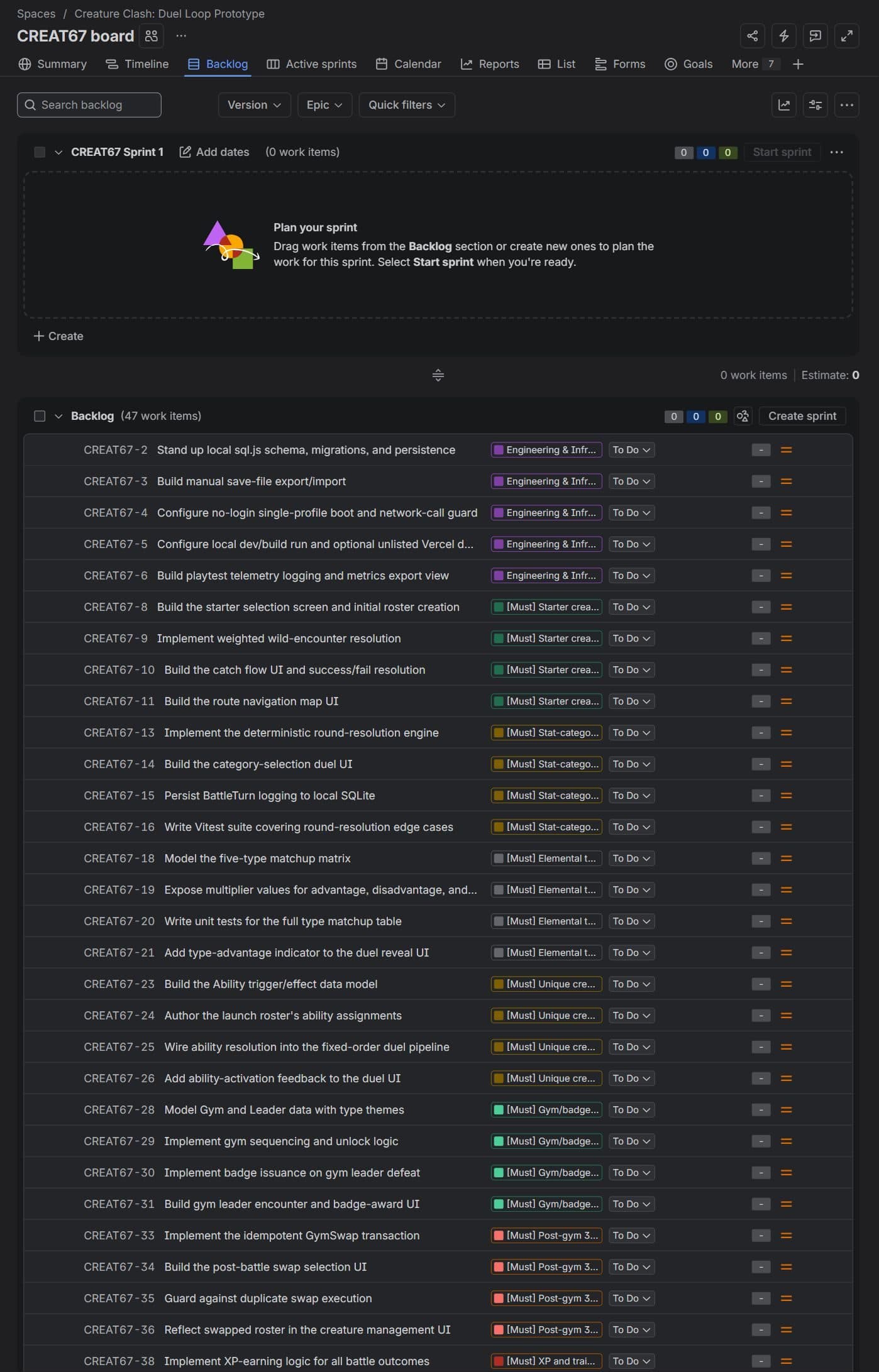
A creature battler for phones: duel on stats and creature types, then take a team of three into a gym. Built in React Native.
Nº 03
3D in the browser
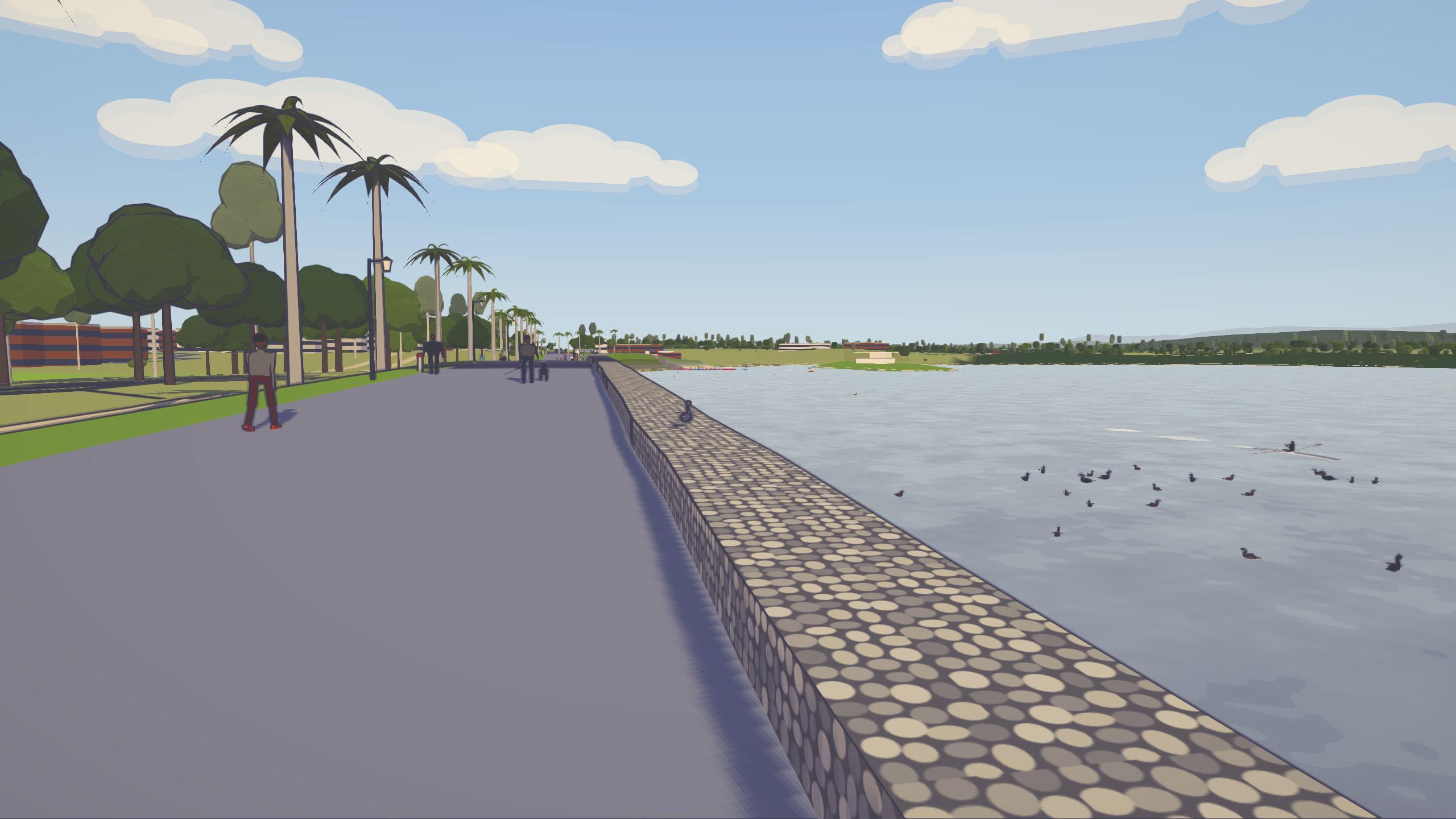
A winter-morning jog around Chandigarh's Sukhna Lake, in the browser, built with three.js.
Nº 04
AI tool, in 3D
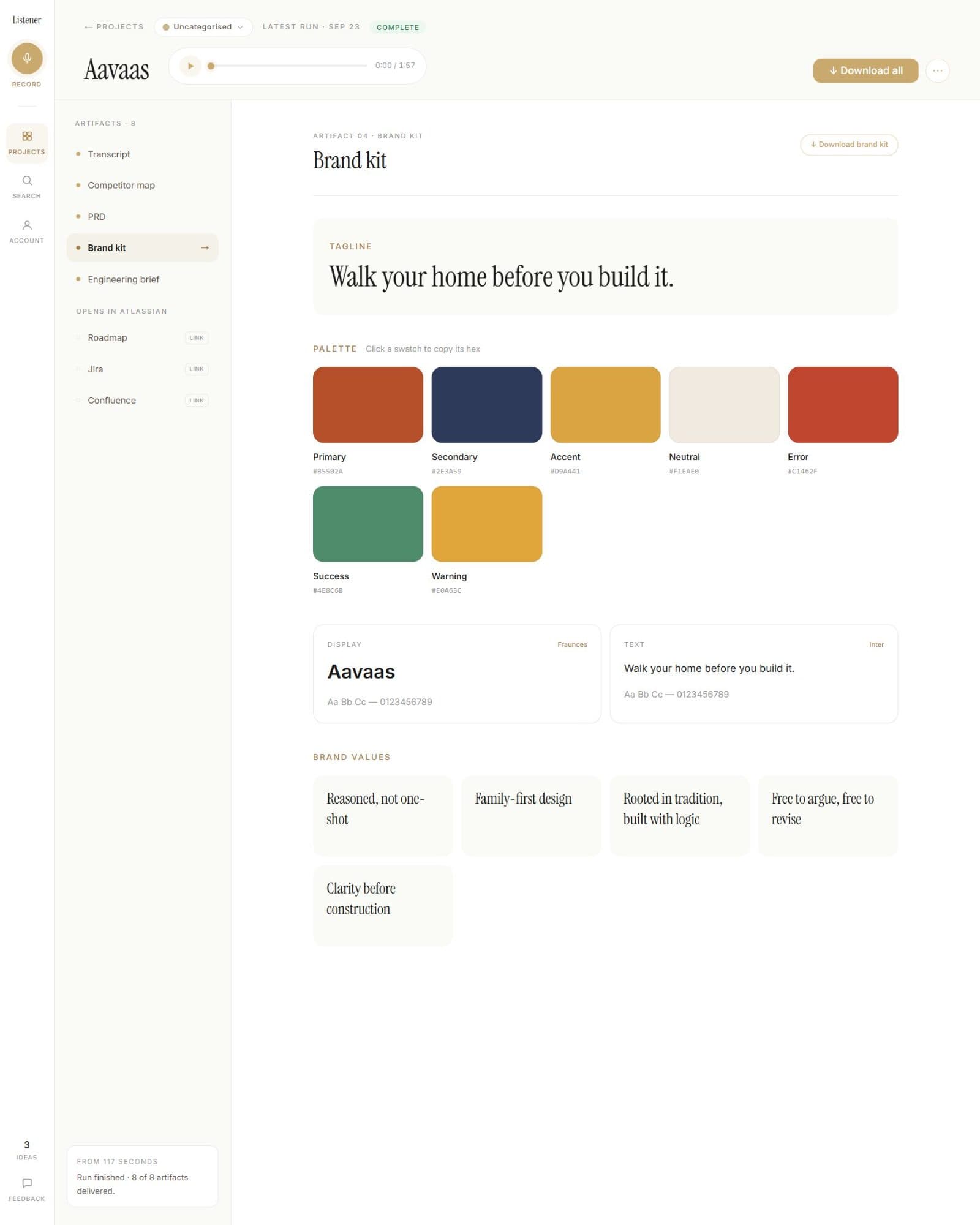
A browser app where an Indian family speaks their plot and household into a walkable 3D house model they can argue with.
Nº 05
Web app

An AI marketing CRM.
Next ascent
Yours
Bring a bare idea or a finished plan. One 30-minute call decides it.
Price
Sheet 05
Pick what has to work on day three. It fills the 72 hours, and the price follows: $1,500 (₹1,35,000) with room to spare, $2,000 (₹1,80,000) for a full sprint. It's a draft until the call, and fixed in writing before you pay anything.
Your price
46 of 72 hours
₹1,35,000 · per 72-hour sprint
Tick what has to work on day three. The price updates as you go.
Your 72 hours, as a climb
46 of 72 hours
Price
₹1,35,000 in INR
per 72-hour sprint
Fits one sprint, with room to spare. Your choices go with you to the booking form.
How the price lands
Who you work with
Sheet 06
From the first call to the handover, you deal with one person: Asuma. The scope, every decision during the sprint and the deliverables go through the same point of contact, so nothing gets lost between hand-offs.
The heavy lifting runs on our agentic pipeline and a build process proven on five MVPs, each built in a week or less. By design, SprintZero takes on two to four sprints a month, so every build gets full attention.
Built in public as @AsumaCodesYouTubeXGitHub
Questions
Sheet 07
A deployed, working MVP: the code in your repo, the infrastructure in your accounts, the keys, and a walkthrough recording. Not a prototype and not a clickable mock.
No. Bring a bare idea and share it on the call: within half an hour our agentic pipeline turns it into a PRD, a brand kit, a tech design and a Jira board, enough to judge the plan before you book. If you already have docs, the build starts from yours.
After the call, once the scope and price are agreed in writing and the start payment is made. Most sprints run Friday to Sunday. Urgent ones can run midweek.
By scope. A 72-hour MVP costs $1,500 to $2,000 (₹1,35,000 to ₹1,80,000): $1,500 when it fits with room to spare, $2,000 for a full sprint. The scope builder on this page gives you a draft number in a few taps. Past 72 hours it estimates the extra at the sprint's own rate, about $28 an hour, and the call decides whether to cut it to fit or plan a second sprint. The real price is fixed in writing before you pay. You are invoiced in USD or INR.
Then it's on me. If the agreed scope isn't live at T+72 and the scope hasn't changed, I keep going at no extra cost, and the delivery invoice drops by 5% of the sprint price for each day it runs over, up to 25%. If the scope changes mid-sprint, the change is quoted in writing first and the deadline moves with it.
It includes the foundation, the core path your users need, a production deploy and the handover. It doesn't include multi-market launches, long-tail polish or every edge case a year-two roadmap would cover. The call draws that line before you pay.
Yes. The repo, the infrastructure and the keys transfer to you at handover. Nothing stays hosted on our side.
Thirty days of support: bug fixes and questions on what shipped. After that, support and new features are quoted and billed separately.
Asuma, from the first call to the handover: one point of contact for the scope, every decision during the sprint and the deliverables, backed by our agentic pipeline. By design, SprintZero takes on two to four sprints a month, so each build gets full attention.
One 30-minute call decides it. If it isn't a fit, you'll hear that on the call.